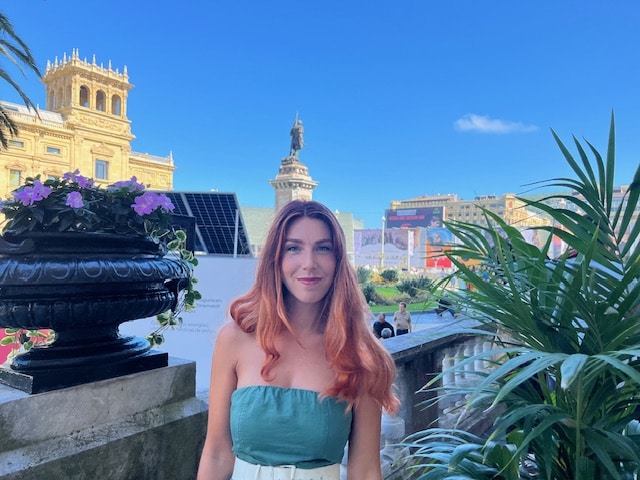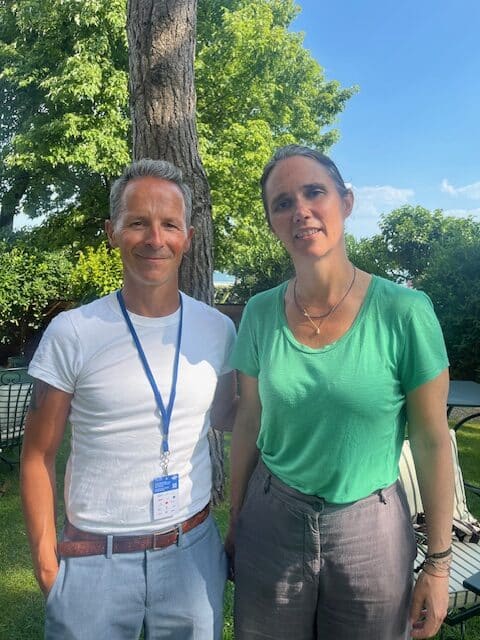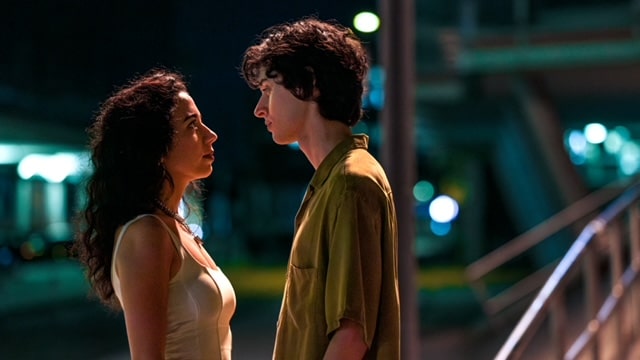
Geister. At the San Sebastián Film Festival.
I feel a sense of gentleness mingled with something far more painful, as though Fatih Akin had wanted to rediscover, beneath all the violence, all the wounds and all the shadowy places his cinema has so often explored, a more unguarded, almost purer form of feeling, something that still belongs to that age when we can love before we have learned to protect ourselves, when we believe everything is beginning at the very moment life may brutally decide that everything must stop.
Faris and Farasha are twenty when they meet, a single glance is enough, then Farasha dies that very night, yet their story does not end there, because she manages to reach Faris in his dreams for forty nights, and I love this idea deeply because it turns the supernatural into something profoundly intimate: not the spectacular wish to bring back the dead, but the much simpler, far more universal longing for a little more time with someone we have just lost.
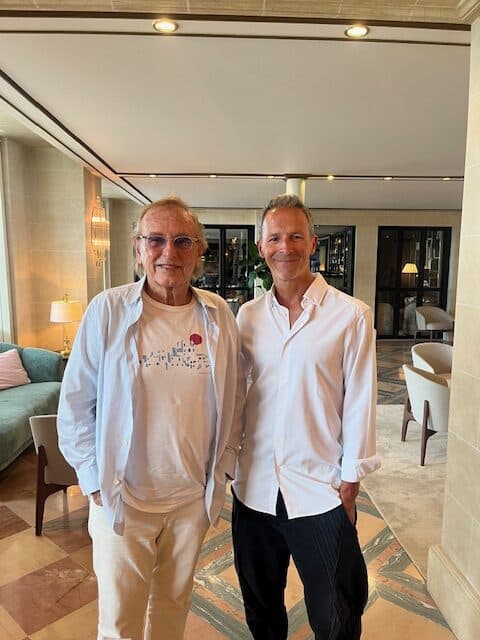
Fatih Akin talks about the film. This story contains several lives within it, because it began long before its present form, with an idea his son had about a child and a ghost, before the years passed, his own children grew up, the project changed alongside them, and what was originally meant to be a story closer to childhood gradually became a tale of youth, love, loss and that strange boundary between those who are still here and those we somehow continue to feel beside us.
I find something very beautiful in the way Geister seems to have grown alongside its director’s family, as though cinema were not simply a place where he creates stories, but a space in which an entire life can settle, with children becoming adults, the influences we receive from them in turn, the films we discover through them, the wounds we had not yet known when we began writing, and even the absences that, years later, profoundly alter the meaning of a story.
Fatih Akin speaks at length about everything that has nourished him, the films he has watched, American cinema, westerns, the imaginative world that accompanied his youth, but also what his children have introduced him to in turn, particularly Japanese animation, with its parallel worlds, its ghosts, its transformations, its stories in which the boundaries between life, death, dreams and reality suddenly become far more porous, and I find it fascinating to see how all these influences, which might seem so distant from one another, come together naturally in Geister.
I enjoyed hearing him speak about this exchange between generations: for a long time, we imagine that adults are the ones who show children the world, then a moment arrives when the movement reverses, when they begin introducing us to other images, other stories, other ways of seeing.
He looks at this younger generation with both tenderness and concern, speaking about what they are going through, their isolation, their vulnerabilities, the difficulty of finding their place in a world that paradoxically gives the impression that everything is accessible, everything visible, everything within reach, even as loneliness can become overwhelming and we can find ourselves lost amid this abundance of demands, screens, distractions and possibilities.
Beneath the film’s romantic beauty, beneath the dreams, the ghosts and the love, there is always something darker, a pain rising to the surface, a concern for very young people still trying to work out how to live in a world that constantly asks them to move faster, look elsewhere and immediately move on.
And yet, here, Fatih Akin chooses to slow down.
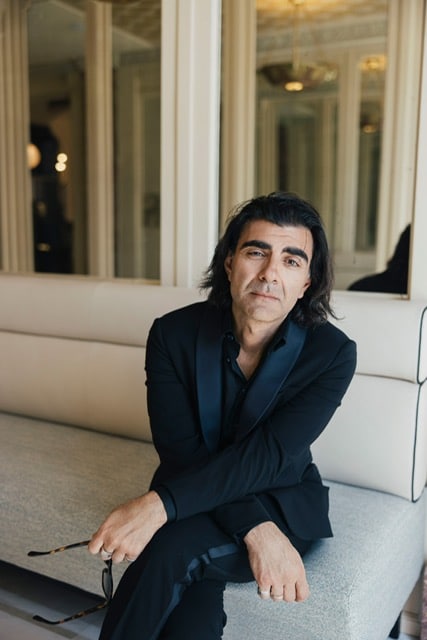
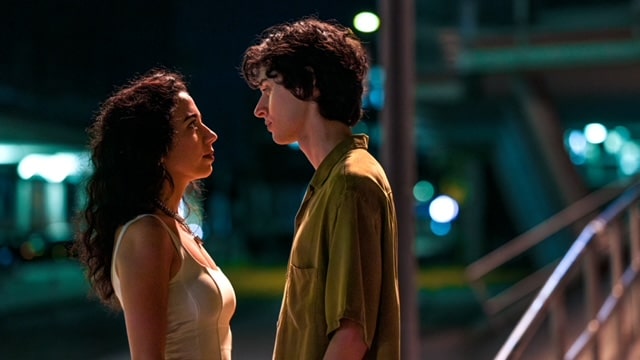
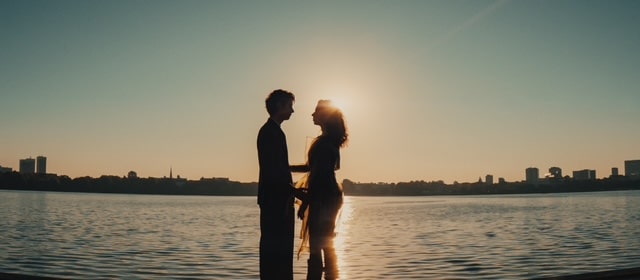
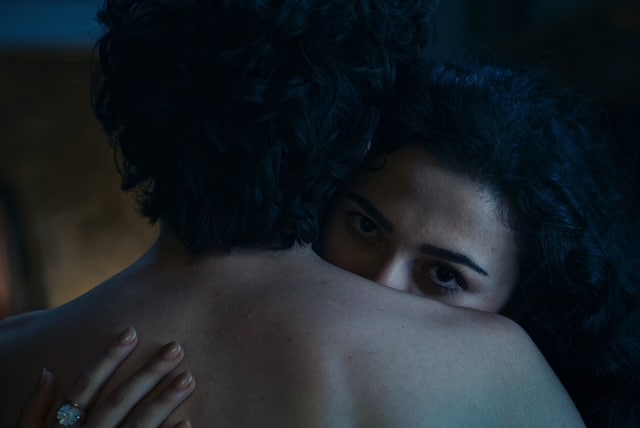
He chooses a love, a face, an absence. Forty nights. He chooses to look at what happens when we stop running from what we feel, and something even more personal has come to nourish the film: the death of his father, which he speaks about with great simplicity, never trying to force emotion, recalling in particular how, after his father’s death, he had wished to meet him in a dream, simply to see him again, to prolong a conversation, to have a few more moments that reality had denied him.
Ultimately, films are no longer merely spaces of fiction, they become almost places where reunions might be possible, places where we sometimes hope that those we have lost might return to us, even just once, not to offer a definitive answer but simply to be there a little longer. Spirituality leaves room for this mysterious possibility that certain presences continue to accompany us, in a memory, in a song, in a dream, in an image, in that very particular feeling that someone is no longer there and yet still occupies an immense space.
Fatih Akin also speaks about the need to tell stories, to discover, to allow ourselves to be influenced, never to stop looking elsewhere for what might nourish a film or a life, and I appreciate the freedom with which he evokes his references, without any apparent hierarchy, as though everything could belong to the same movement, from westerns to Japanese animation, from the supernatural to melodrama, from darkness to something profoundly luminous.
I leave the screening room. Perhaps Geister was not really about ghosts, or at least not the ones we imagine in supernatural stories, but rather those we all carry within us, those people, those memories, those sorrows and those loves that continue to live long after they have gone, sometimes more quietly, sometimes more intensely still, through a love story, two young people, a handful of nights, and the deeply moving idea that time suddenly becomes infinitely precious once we know it is limited.
Finally, heartfelt thanks to the press officers for their welcome, their time and their kindness, and to the teams at the Hotel María Cristina, during these days of cinema in San Sebastián.
Ghost song, de Fatih Akin, avec Mariam Dawoud, Eren M. Güvercin, Carlotta von Falkenhayn, Gabriel-Winner Amorim