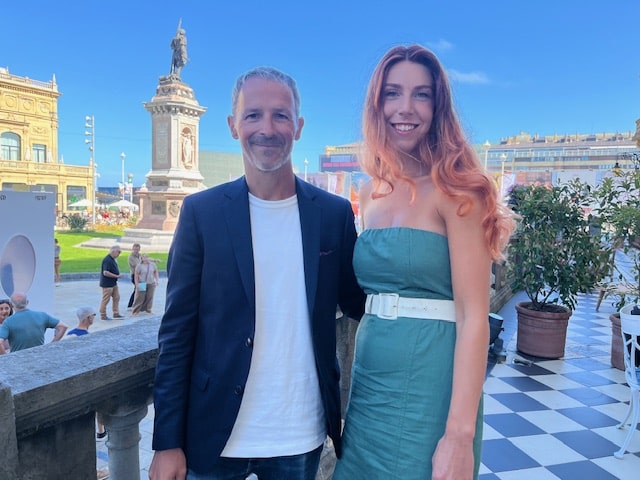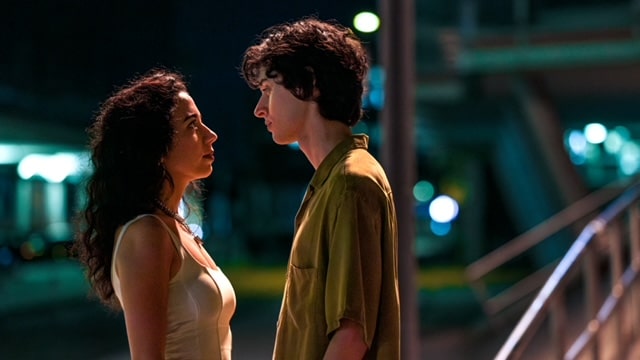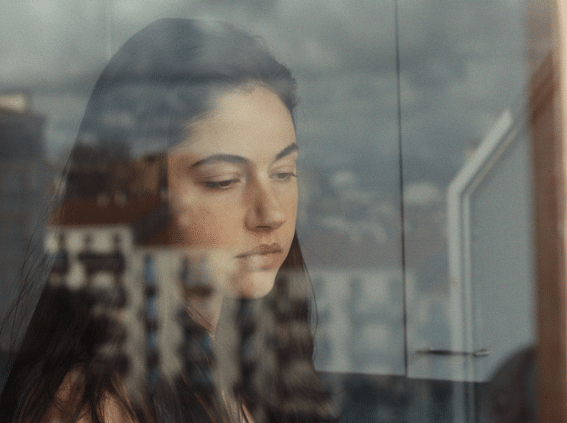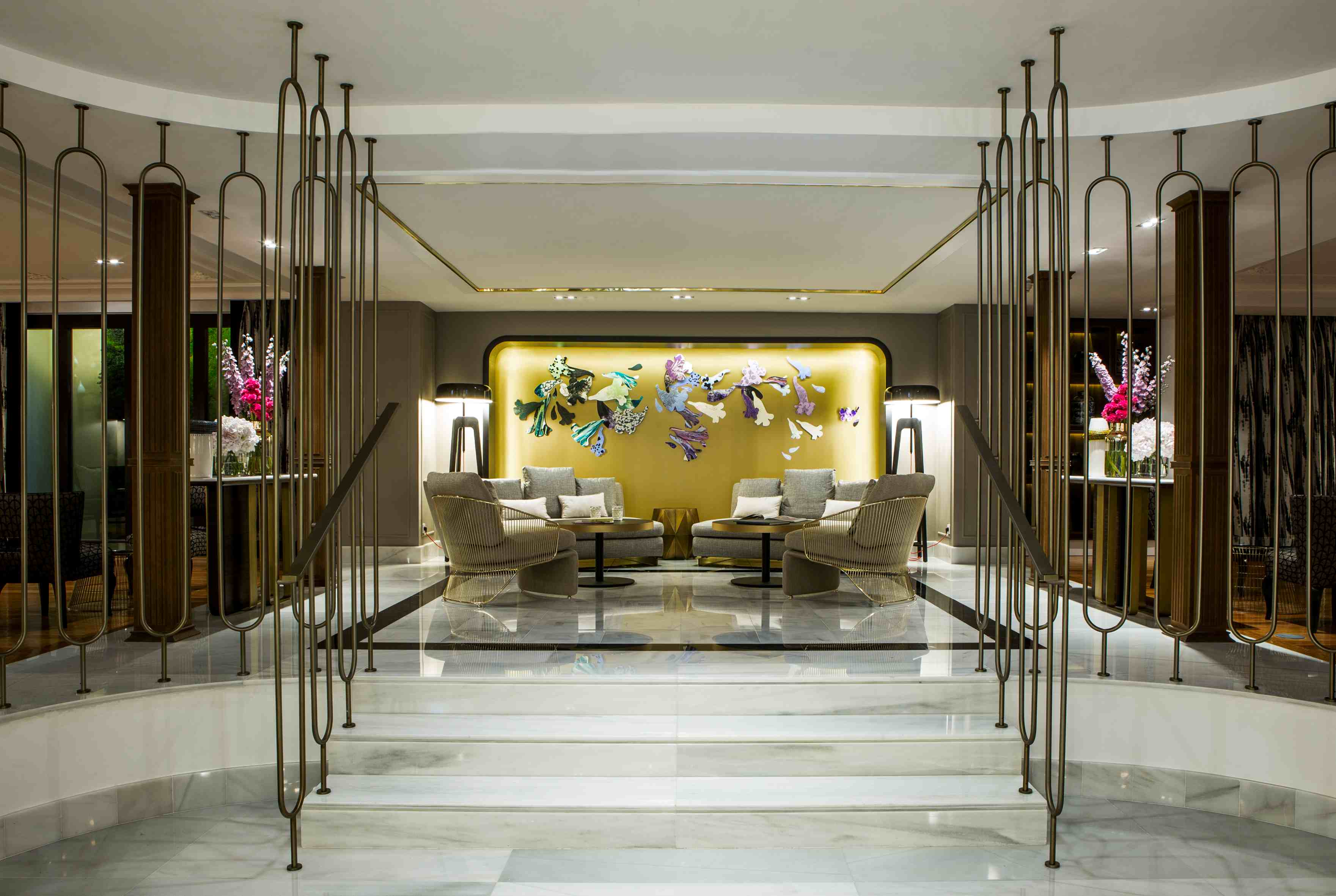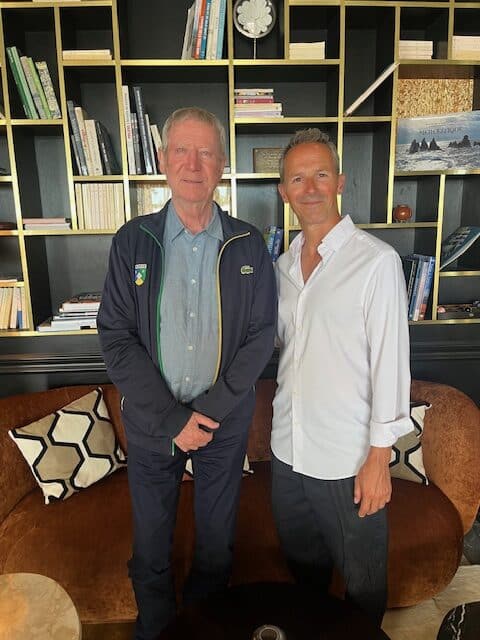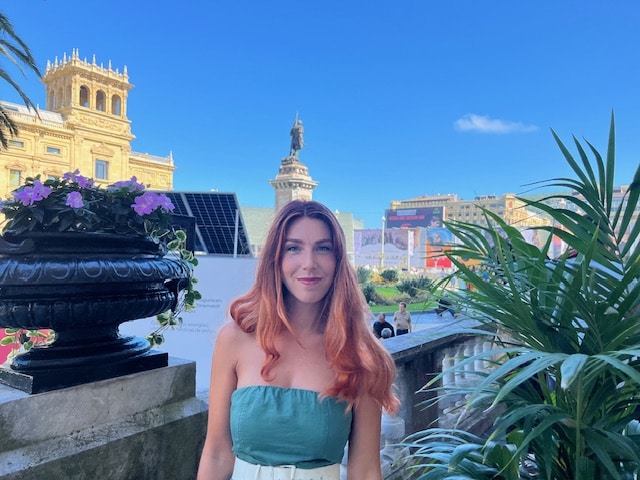
At the San Sebastián International Film Festival, I met filmmaker Marlène Emilie Lyngstad at the Hotel María Cristina to discuss « Cute », her debut feature. Exploring transgressive desires and a relationship that resists straightforward moral categorisation, the film deliberately places the viewer in an uncomfortable position : it asks audiences neither to endorse its characters’ behaviour nor to condemn them outright, but to take the time to examine what lies behind their impulses, their loneliness and their need to be loved.
Tristan Baille : « Cute » explores particularly uncomfortable and transgressive desires. How did you find the right balance between confronting audiences with those desires and avoiding sensationalism ?
Marlène Emilie : It was difficult, because that balance can shift in a matter of seconds, sometimes with a single image. When I was writing the screenplay, I tried to trust the context. Once the audience knows about Richard’s desire, there is no need to keep showing it or explaining everything. With a few exceptions, the scenes are not directly shocking : they work more indirectly. You sense that Richard is thinking about something, but you do not always know exactly what.
That is also one of the reasons the film has a fairly slow pace. I wanted audiences to really experience the situations, inhabit the scenes and feel time passing. With a subject like this, if you tell the story too quickly or too explicitly, you run a much greater risk of making something sensationalist.
Tristan Baille : The film constantly plays with the idea of being looked at, desired or turned into an object. Can Cute also be seen as a film about the way contemporary society turns intimacy into something that can be displayed and consumed ?
Marlène Emilie Lyngstad : Yes, to a certain extent. Part of the film deals with this objectification of cuteness, with the production of objects or clothes designed to be “cute”. I find it fascinating how many adults are drawn to that world and feel the need to buy those things.
Beneath that demand, I think there is a very human emotional core. People may long for a simpler world, for a more childlike state of mind that would free them, at least temporarily, from the responsibilities and complexity of contemporary adult life. So this desire to return to childhood is not simply aesthetic : it also reveals a need for protection, simplicity and comfort.
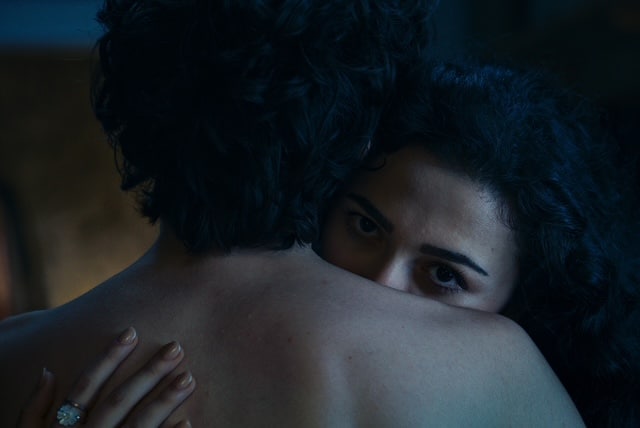
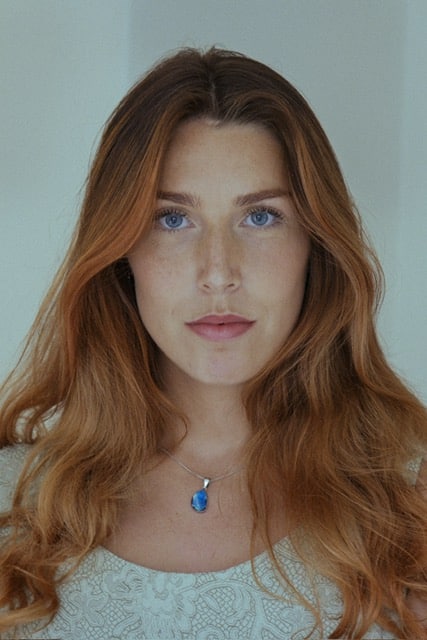
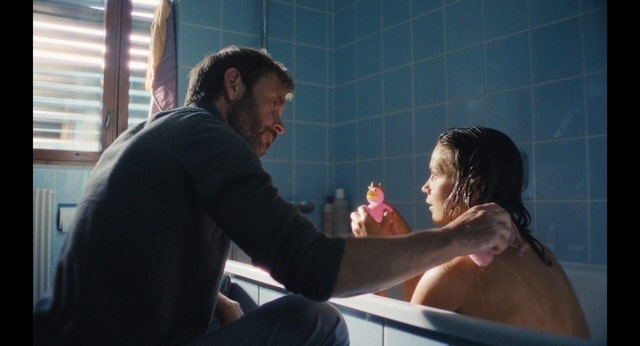
Tristan Baille : Desire can become disturbing when it comes into conflict with the law or society’s moral boundaries. Yet it would have been too easy to immediately label Richard “the bad guy”. Instead, your film makes us ask who this man and woman really are, and why they have this unusual relationship. Was it essential for you not to condemn them from the outset ?
Marlène Emilie Lyngstad : Yes, absolutely. The project began with a real encounter with a couple who belonged to a BDSM community and practised what is known as “age play”. It is a form of role-playing in which one partner takes on the role of a caregiver, while the other adopts a more vulnerable position and receives that care.
For many people, this may initially seem absurd or difficult to understand. But as I got to know this couple better, I realised there was something very universal at the heart of their relationship. Their bond was largely rooted in an emotional need, rather than being purely sexual : this woman wanted someone to take care of her, while this man felt the need to care for someone.
My fascination with this couple and the way their relationship worked made me want to explore it further through two fictional characters.
Tristan Baille : Your films seem particularly interested in characters whom audiences cannot easily identify with.
Marlène Emilie Lyngstad : That is true. Throughout my work, I am interested in people who are not easy to identify with. I would like audiences to look at them and perhaps try to understand them. But I am not asking viewers to identify with them: that is not my goal.
Understanding someone does not necessarily mean approving of their actions. But I think it is important to try to understand people who are very different from us. That effort also makes us question our own reactions.
Tristan Baille : That is precisely what the film does. At first, a viewer may react very strongly and simply see Richard as repulsive. Then we discover his loneliness, his relationship with his mother, the house he lives in and everything that makes up his existence. The truth becomes much harder to define.
Marlène Emilie Lyngstad : Yes, it is not easy to define.
Tristan Baille : I also felt that « Cute » was trying to reveal both the innocent and the darker sides within us. Not necessarily because we share the characters’ specific desires, but because we all have desires that may frighten us or that we would rather not examine. Avoiding the truth can sometimes ease our conscience, at least temporarily.
Marlène Emilie Lyngstad : That is a very interesting interpretation. The film is not only about sexual desire. It is also about the desire to be desired and, more broadly, what desire does to us. That is something I have explored in different ways in my previous films.
Tristan Baille : Your previous film, which screened at Cannes, already explored a character who seemed to be “flirting with the law”. Is this question of desire and its limits a recurring thread in your work ?
Marlène Emilie Lyngstad : Yes, but it also has a lot to do with how I work. As you were saying about your own book, one project often grows out of the one before it.
I do a great deal of research, meet people and begin by gathering documentary material. I then use that material to write a fictional screenplay. When I made my graduation film, which screened at Cannes, I had a lot of material and several characters left over that I had not been able to include. I carried them with me, and some found their way into Cute. For my next project, I will probably use things I was unable to develop in this one.
It is a very organic process. So it is natural for certain themes to carry over from one film to another and continue to evolve.
Tristan Baille : Life is messy, sometimes chaotic, and we are constantly trying to organise and control it. A film is ultimately like an enormous puzzle whose pieces keep changing. Today, that journey has brought you to San Sebastián with your debut feature. What does it mean to you to have a film like Cute selected for such an important festival ?
Marlène Emilie Lyngstad : It is fantastic. I am extremely grateful to the San Sebastián Film Festival for choosing this film, because many festivals probably would not have dared to show it. It raises such difficult questions that it would be much easier to dismiss it immediately than to take the time to engage with it. So I am very impressed by the festival’s decision and very happy that the film can be shown here.
I also think that recognition from a major festival can encourage audiences to take the film more seriously and better understand my intentions. I hope it will therefore not be seen simply as sensationalist, or as a film made solely to shock. I have really tried to approach this subject seriously. My intention was never to provoke for its own sake. That is why I am so grateful to be here.
Tristan Baille : Could Cute become a novel one day ? Cinema has an hour and a half or two hours, whereas a book allows you to explore each character’s thoughts and life in greater detail.
Marlène Emilie Lyngstad : It would be very interesting to think about how this story could be adapted into a book. You would then have to decide whose point of view to tell it from: Richard’s or Stella’s ?That choice would completely change our perception of the story. But why not ? It could be fascinating to explore it in that way.
Tristan Baille : The screening in San Sebastián is the film’s world premiere. Do you already know where it will go next ?
Marlène Emilie Lyngstad : We will be going to the festivals in Riga and São Paulo, among others. As this is the world premiere, we do not yet know all the festivals that might show the film. Naturally, we hope it will continue its journey and be screened in many other places.
Tristan Baille : Are you already working on a new screenplay ?
Marlène Emilie Lyngstad : Yes. I am currently on parental leave, as I had a baby two months ago. So work is somewhat on hold for the moment, but I am still writing the screenplay for my next film. I am trying to combine the two : being an artist and being a mother.
Tristan Baille : Thank you very much, Marlène Emilie Lyngstad, for this conversation and for taking the time to speak with me during the San Sebastián International Film Festival.
My thanks also go to Barbara, the film’s press officer, for organising this interview, and to the Hotel María Cristina for its hospitality in this iconic festival setting.