TRISTAN BAILLE : Your film shows an artist at a moment when he is struggling to create. Do you think there is a dangerous relationship, for some artists, between creativity and destruction ? Why do suffering, addiction and chaos so often seem to accompany the creative process ?
GRANT GEE : I think there can be a relationship, but I’d be very careful about saying that destruction is somehow necessary for creativity. That’s a seductive idea, because it fits the mythology we have around artists, but I don’t really believe it works like that.
What interested me with Bill was the contradiction. When he plays, there is extraordinary discipline, concentration, control. Improvisation may sound spontaneous, but it demands enormous rigor. You have to be completely present, completely alert, and somehow create form in real time.
And then, outside the music, his life could be terribly unstable.
That contrast fascinated me. You have someone capable of creating something incredibly precise and beautiful, while at the same time being unable to control other parts of his life.
Maybe the music gave him a temporary structure. Maybe it was somewhere he could organize chaos for a few minutes. But I don’t think the art cured the chaos. It may simply have allowed him to live alongside it.
And I think that’s more interesting, and probably more truthful, than saying suffering produces great art.
TRISTAN BAILLE : Do you see jazz, and perhaps music more broadly, as a world apart, with its own rules, its own relationship to time, solitude and danger ?And did making this film give you the feeling that musicians sometimes inhabit a reality that outsiders can never fully understand ?
GRANT GEE : I’m not sure I would describe it as a completely separate world, but I do think music gives people access to a different way of experiencing things.
With Bill, that was particularly important because he was not someone who seemed naturally inclined to explain himself. He could be very contained, very private. So if you rely only on biography, on facts, on what people say about him, there’s always something missing.
Then you listen to him play and suddenly there is another kind of information there.
Not information in a literal sense, obviously, but emotional information.
You begin to feel things about him that perhaps he could never have articulated himself.
And jazz is very interesting in that respect because there is a strange relationship between freedom and discipline. From the outside, improvisation can look like pure freedom, but actually it depends on incredible knowledge, restraint and attention.
So perhaps musicians do inhabit a space that the rest of us can only partially enter.
But that’s also what makes music powerful. You don’t necessarily need to understand technically what is happening in order to feel that something is being communicated.
TRISTAN BAILLE : There is a striking contradiction in Bill Evans : an extraordinary sense of control and discipline in the music, while his personal life was often slipping out of control. Do you think creativity can be a way of imposing order on chaos, or can it sometimes become a way of surviving inside that chaos without escaping it ?
GRANT GEE : Yes, I think that contradiction is really central to him.
There are so many oppositions in Bill. He could be incredibly disciplined and incredibly reckless. He could be reserved, almost withdrawn, but at the same time he had to go onstage and communicate with people. There was elegance in the work and disorder in the life.
And I don’t know if the music imposed order on his life so much as created a place where order was possible.
That distinction matters to me.
Because we often like stories in which art saves people. It gives the narrative a kind of resolution. But real life isn’t always like that.
You can make something astonishingly beautiful and still be in serious trouble.
You can create order for forty minutes onstage and then return to disorder afterwards.
So perhaps creativity was not an escape from chaos for Bill. Perhaps it was a way of surviving within it.
And that is both more complicated and more moving to me.
TRISTAN BAILLE : Did the beauty of his music exist despite the chaos of his life, or was some part of that beauty actually born from it ?
GRANT GEE : I don’t think I can answer that, and I’m not sure I’d want the film to answer it either.
It would be too simple to say that the beauty came from suffering.
Once you say that, you risk turning addiction and pain into something romantic, as if the destruction were somehow justified by the art. And I really don’t think that’s a useful way of looking at someone’s life.
But at the same time, once you know what happened to Bill, it becomes difficult to hear the music in exactly the same way.
You start hearing fragility, melancholy, tension.
The interesting question is whether those things are really in the music, or whether we place them there because we know the story.
And that uncertainty is fascinating to me.
I think biography changes listening.
You hear something, then you learn something about the person who made it, and suddenly the same piece of music seems to contain another dimension.
But I would rather preserve that mystery than reduce Bill to a psychological formula.
I don’t think you can say : this happened in his life, therefore the music sounds like this.
People are much stranger than that.
TRISTAN BAILLE : One thing that struck me is that, at certain moments, you don’t use Bill Evans’s music. Why did you choose to leave that space, that absence? You chose to focus on a period in his life when he was not really playing. What did that silence allow you to reveal about him that the music itself might have hidden ?
GRANT GEE : That was one of the things that interested me most about the project.
If you make a film about a musician, the obvious temptation is to fill it with music. You have this incredible body of work, and of course you want to use it.
But then the music can become a kind of protection.
Every time Bill appears, you hear this beautiful music, and immediately you are reminded that he is a genius. And I wanted moments where that protection disappeared.
I wanted to spend time with him as a person.
With grief, with boredom, with the family, with silence, with the periods when nothing is happening.
Because those moments tell you something different.
The absence of music creates a kind of emptiness around him, and I found that very useful dramatically.
You begin to notice his presence in another way.
And then, when the music does return, you hear it differently because you have spent time without it.
I was also very drawn to this particular period precisely because it is an unusual way of approaching a musical figure.
It’s not the triumph. It’s not the famous performance. It’s not the moment of success.
It’s the interruption.
And sometimes an interruption tells you more about someone than the thing they are famous for.
In a way, silence allowed us to see what the music could conceal.
Not because the music is false, but because it is so powerful.
It can overwhelm everything else.
So I wanted to create enough space for the man to exist alongside the musician.
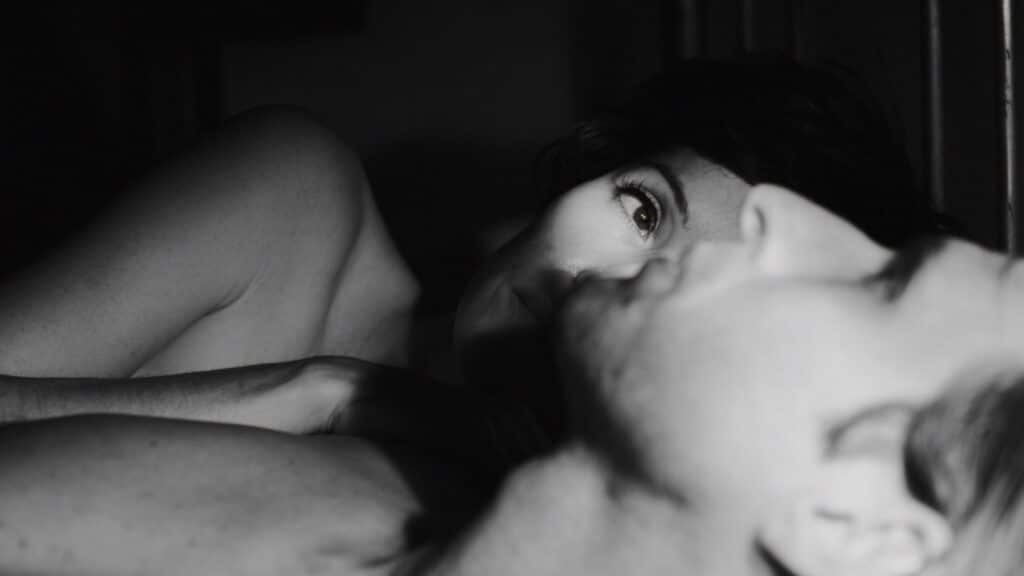
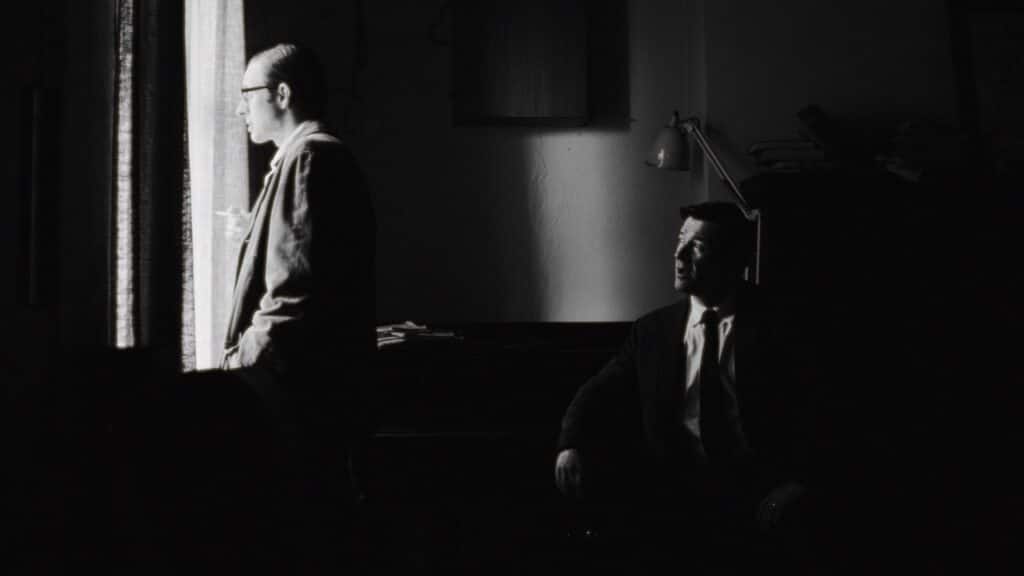
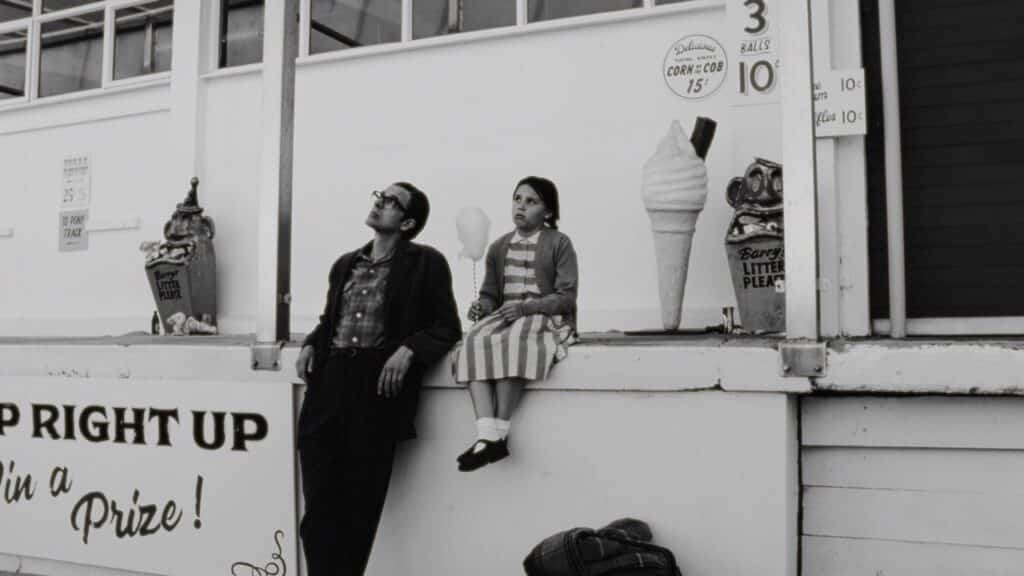
With Everybody Digs Bill Evans, adapted from Owen Martell’s novel Interlude and written for the screen by Mark O’Halloran, Grant Gee explores a pivotal period in the jazz pianist’s life. In 1961, shortly after his trio records two albums that will become legendary, his bassist and musical partner Scott LaFaro dies in a car accident. Devastated, Bill Evans stops playing and sinks deeper into doubt and addiction, until his brother takes him to the family home in Florida in an attempt to help him.
Against the backdrop of this retreat, the film explores the contrast between a chaotic life and music of extraordinary delicacy: precise, luminous and almost weightless. Grant Gee focuses on the vulnerability of a man whose artistic discipline endures despite his self-destructive behaviour, and on the place that family, love and creativity can still occupy in a life marked by grief. His relationship with Ellaine Schultz brings tenderness to the portrait, revealing the happiness that remains possible amid tragedy.
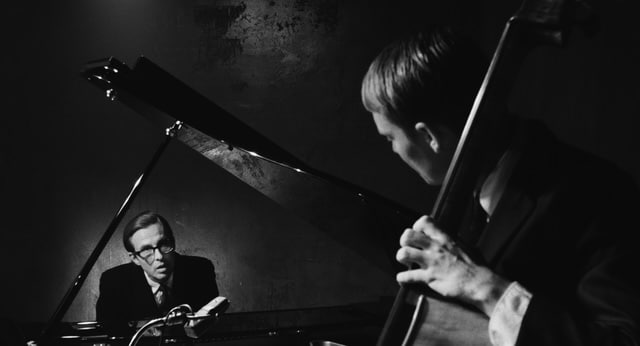
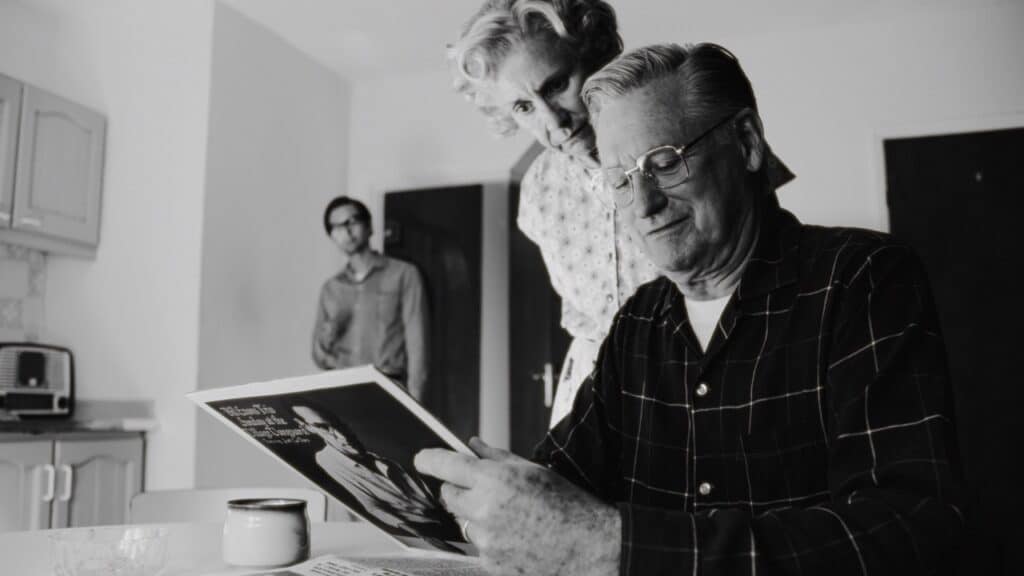
Bill Evans is played by Anders Danielsen Lie, an actor, musician and doctor who performs several piano passages himself. Drawing on his familiarity with Evans’s music, he seeks to capture the pianist’s sensitivity rather than simply reproduce his gestures. Alongside him, Bill Pullman and Laurie Metcalf play Evans’s parents, Barry Ward his brother, and Valene Kane his partner, Ellaine.
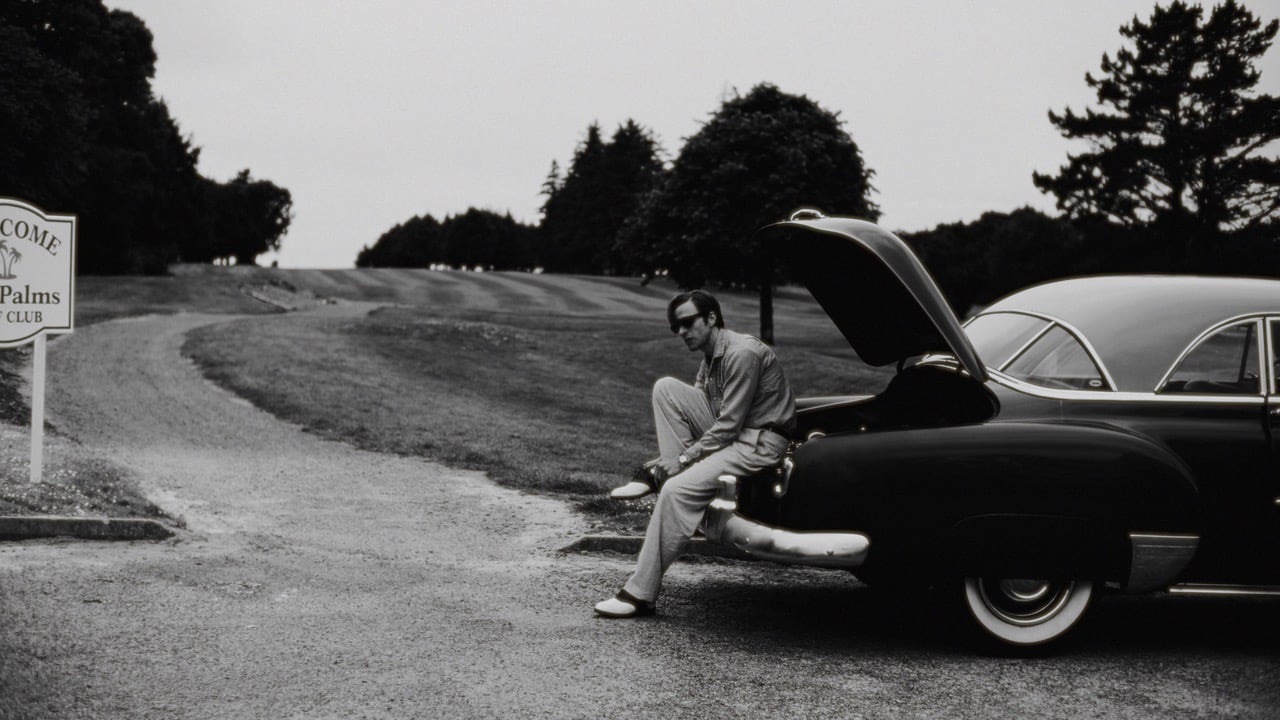
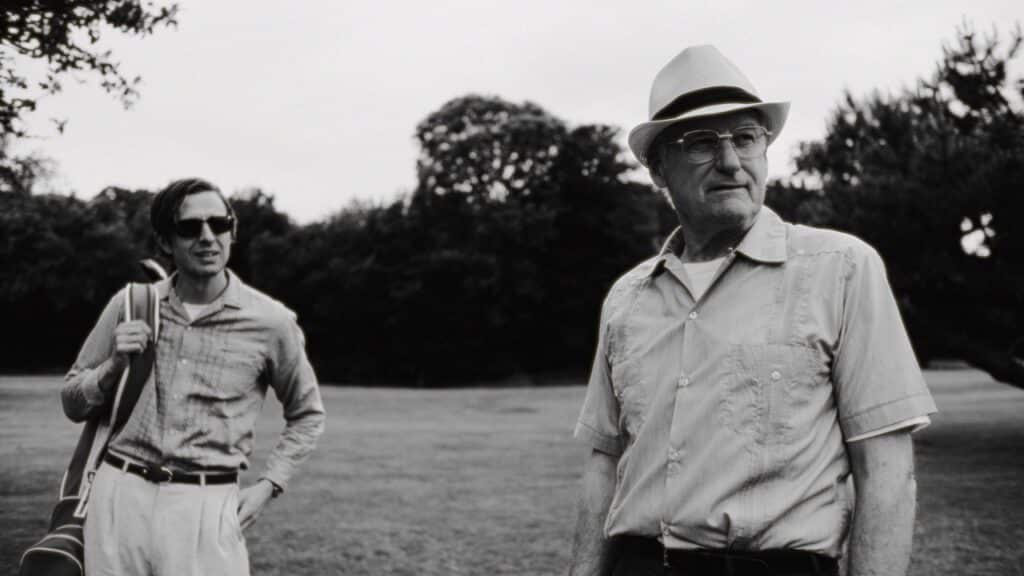
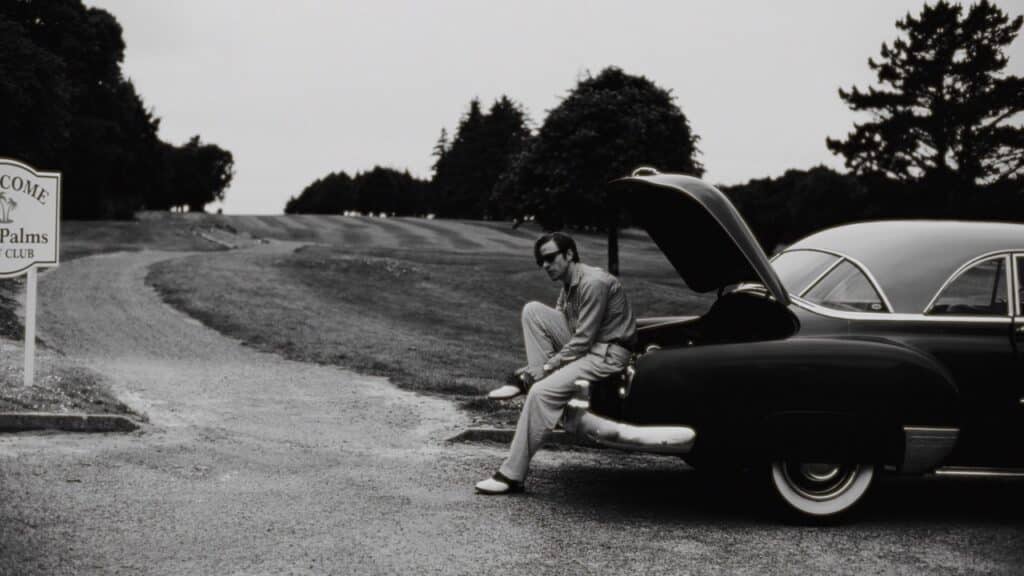
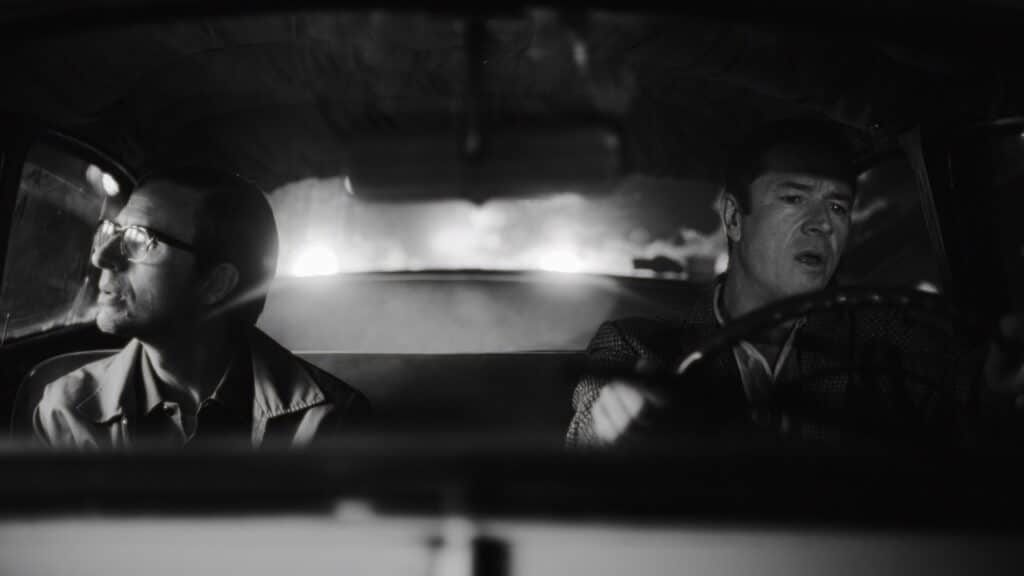
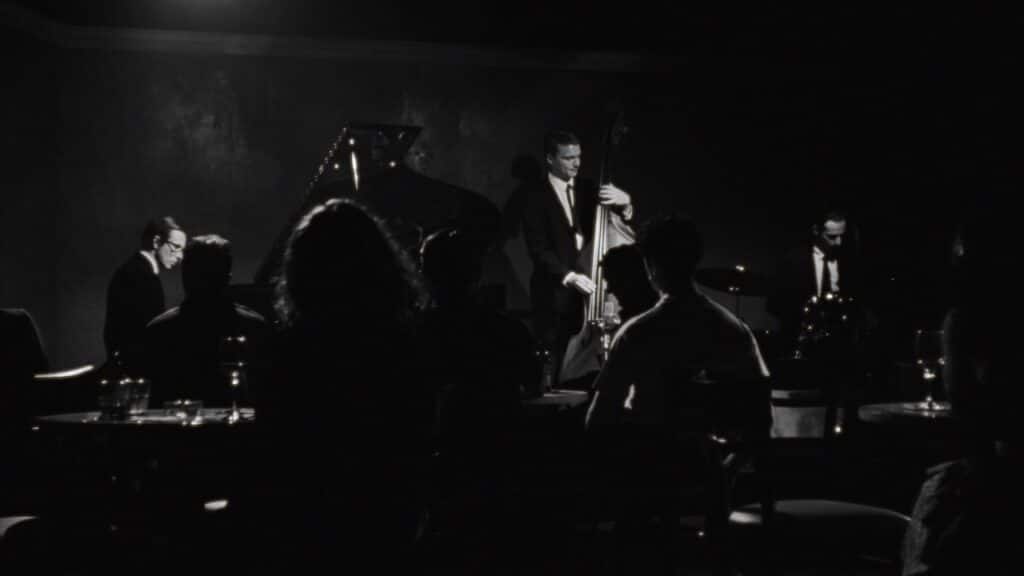
The film uses contrasting visual styles to distinguish its periods : black and white accompanies the story set in 1961, while colour introduces glimpses of the 1970s. Shot in twenty days in West Cork, Ireland, on a modest budget, it recreates New York and Florida through transformed locations and rear projection. This visual ingenuity serves an intimate story in which music remains Evans’s greatest refuge, preserving a place for joy despite his losses.