Tristan Baille : First of all, congratulations on the film. I was very moved by it. Minnie seems to have built a large part of her identity through Callie, who is more confident, more charismatic, perhaps more comfortable with herself. When Callie disappears, Minnie does not only lose her best friend, she also seems to lose the person she was when she was with her. Was that one of the starting points for the film ?
Kelly O’Sullivan : Yes, absolutely. When you are a teenager, your friendships can become such an important part of your identity. Sometimes you do not really know where you end and the other person begins. You borrow things from each other: the way you speak, the music you listen to, the way you dress, even the way you imagine your future.
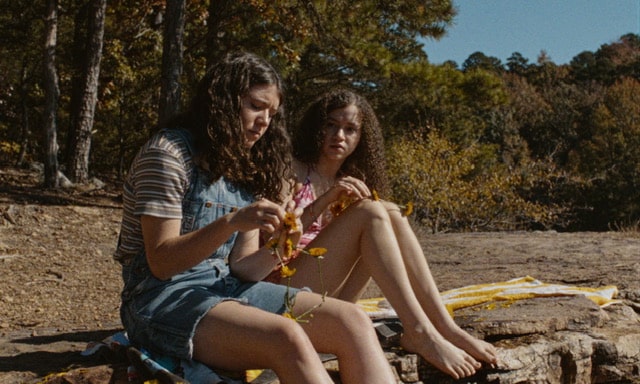
Callie is someone Minnie admires very deeply. She is more confident and seems to move through the world with greater ease. Minnie partly understands herself through that friendship. So when Callie dies, Minnie is not only grieving another person. She is also trying to understand who she is without her. That was something I was very interested in: the way grief can destabilize your identity, especially at an age when your identity is not yet fully formed.
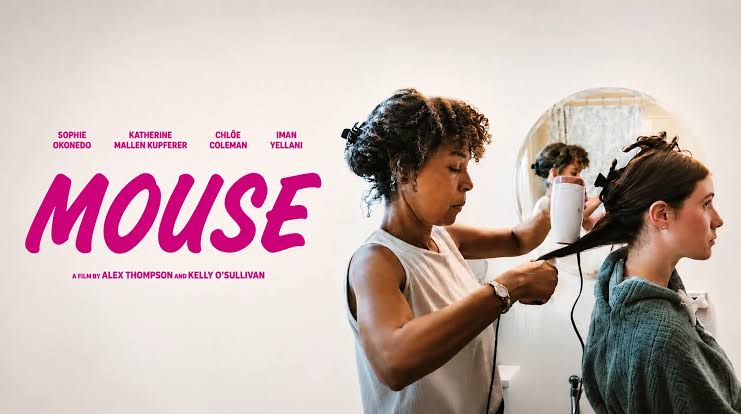
Tristan Baille : This is also something troubling in Minnie’s relationship with Helen, Callie’s mother. At first, we understand why they need each other, but admiration, affection and emotional dependence gradually begin to blur. Minnie almost seems to take Callie’s place. How did you construct that relationship ?
Kelly O’Sullivan : Minnie has always idealized Helen. She sees her as sophisticated and elegant, and probably as the kind of mother she imagines she would like to have. So even before Callie’s death, there is already a fascination.
After what happens to Callie, Minnie and Helen are both trying to remain close to her. They find that closeness through each other. Minnie can give Helen access to part of Callie’s life, and Helen can give Minnie the feeling that she is still connected to her friend.
At first, the relationship is comforting to both of them. But it also becomes complicated because they begin projecting things onto each other. Helen starts to see Minnie as a kind of substitute daughter, while Minnie is drawn into the role Callie occupied.
The problem is that Minnie cannot actually become Callie. And Helen cannot become the ideal mother Minnie has imagined. As the relationship develops, Minnie begins to discover that Helen’s expectations and disappointments are part of the relationship too.
Tristan Baille : The film is set in 2002. Apart from the clothes, the music and the atmosphere, this changes the experience of grief itself. There are no smartphones and no social networks. Was it important to tell this story before grief became something that could immediately be displayed in public ?
Kelly O’Sullivan : Yes. I was a teenager at that time, so it is an era I know very well and felt able to write with some precision.
But the absence of social media was also essential. When something terrible happened, information did not arrive in the same immediate and organized way. You might receive a phone call, hear a rumor, go to somebody’s house or try to find out what had happened through other people.
There was more confusion, and perhaps more privacy too. Today, when somebody dies, there can be an immediate public response. People post photographs, write tributes and explain what that person meant to them.
That can be beautiful and sincere, of course, but it can also create a kind of performance of grief. Sometimes it almost becomes competitive: everyone is publicly establishing how close they were to the person or how deeply they are suffering.
In 2002, the characters do not have that outlet. They have to remain with the discomfort and the silence. They cannot package the experience or communicate it immediately to everyone.
Tristan Baille : The film was inspired, at least partly, by something you experienced personally. Could you talk about that ?
Kelly O’Sullivan : When I was a teenager, a close friend of mine died in a car accident. It happened just before our final year of high school. The film is not a literal reconstruction of what happened. Minnie is not me, and the events of the story are fictional. But that experience was the seed of truth from which the film grew.
What stayed with me was the shock of understanding that a person could be present one day and completely absent the next. And yet everything else continued.
There were still school events, dances, performances and all those rituals associated with the end of high school. Everyone continued moving towards adulthood, while this person who should have been there was suddenly missing from all of it.
There is something almost cruel about the ordinary world continuing after a death. That contradiction stayed with me for a very long time.
Tristan Baille : Yes, because the film is not only about the moment of death. It is also about all the moments that follow, when Minnie realizes that Callie should have been there.
Kelly O’Sullivan : Exactly. Grief is not a single event. The loss repeats itself. You experience the death, but then you experience it again at every important moment: a birthday, a graduation, a performance, a conversation the person should have been part of.
The absence keeps changing because your own life continues to change. You are not only grieving what you had with that person. You are also grieving everything you will never have with them.
Tristan Baille : Minnie gradually begins to use Callie’s belongings, spend time with her mother and even occupy certain spaces that belonged to her. Did you want the audience to feel both compassion and unease about that transformation ?
Kelly O’Sullivan : Yes. I did not want Minnie’s behavior to be judged too quickly.
From the outside, some of her choices may seem disturbing or inappropriate. But emotionally, they make sense to her. She is looking for ways to remain close to Callie. Being in Callie’s house, touching her belongings or spending time with Helen allows Minnie to delay the reality of the separation.
At the same time, there is something unsettling about it because the boundaries begin to disappear. Minnie is not only remembering Callie, she is beginning to enter the empty space Callie left behind.
The film does not offer a simple answer about whether that is healthy or unhealthy. It is both a survival mechanism and something potentially dangerous.
Tristan Baille : There are many moments in which the characters cannot find the right words. People say things that are awkward, insufficient or sometimes almost inappropriate. Do you think cinema can express grief more truthfully through silence and physical presence than through dialogue ?
Kelly O’Sullivan : I think both the silence and the failed attempts to speak are important. When somebody dies, people want to say the correct thing, but there often is no correct thing to say. Language becomes inadequate. You can tell somebody that you are sorry, but the words cannot change anything. Sometimes people say something clumsy because they are frightened by the other person’s pain. Sometimes they speak because they cannot tolerate the silence. And sometimes they say nothing because they are afraid that anything they say will be wrong.
In cinema, you can stay with those moments. You can watch someone hesitate, avoid another person’s gaze or remain in a room without knowing what to do. Those gestures can reveal as much as dialogue.
But I also like the awkward dialogue because it shows people trying. Their words may fail, but the attempt itself can still contain tenderness.
Tristan Baille : I have only seen the film once, so perhaps I need to see all of it again. But I am disturbed.
Kelly O’Sullivan: Oh !
Tristan Baille : I’m joking ! I mean disturbed in a good way. Unsettled.
Kelly O’Sullivan: That is good ! I will accept unsettled.
Tristan Baille : Thank you very much.
Kelly O’Sullivan : Thank you. These were wonderful questions.